There is a specific kind of magic that happens in the kitchen when the aroma of home begins to fill the air. For many Africans living in the diaspora, that scent is a bridge: a sensory connection to the bustling markets of Lagos, the vibrant streets of Addis Ababa, or the serene landscapes of Yaoundé. However, recreating those childhood flavors in a kitchen in London, New York, or Paris can often feel like a challenge when the local grocery store lacks the depth and soul of traditional ingredients.
At BaoAfrik, we understand that "authentic" isn't just a label; it’s a standard of quality and a preservation of heritage. We operate as a community-driven, peer-to-peer marketplace designed to bridge this gap. By connecting buyers directly with sellers who source genuine goods from the continent, we help the diaspora reclaim their culinary roots. Building an authentic African pantry abroad starts with the foundation of any great dish: the spices.
Whether you are a first-generation immigrant looking for the exact taste of your grandmother’s soup or a second-generation explorer reconnecting with your culture, these seven essential spices are the building blocks of a true African kitchen.
1. Suya Spice / Yaji / Kuli-Kuli / Tsire (Nutty Chili Rub)

Origin: Northern Nigeria / West Africa
Common Measurements: 100g, 250g, 500g pouches
Description: A complex, nutty, and spicy dry rub.
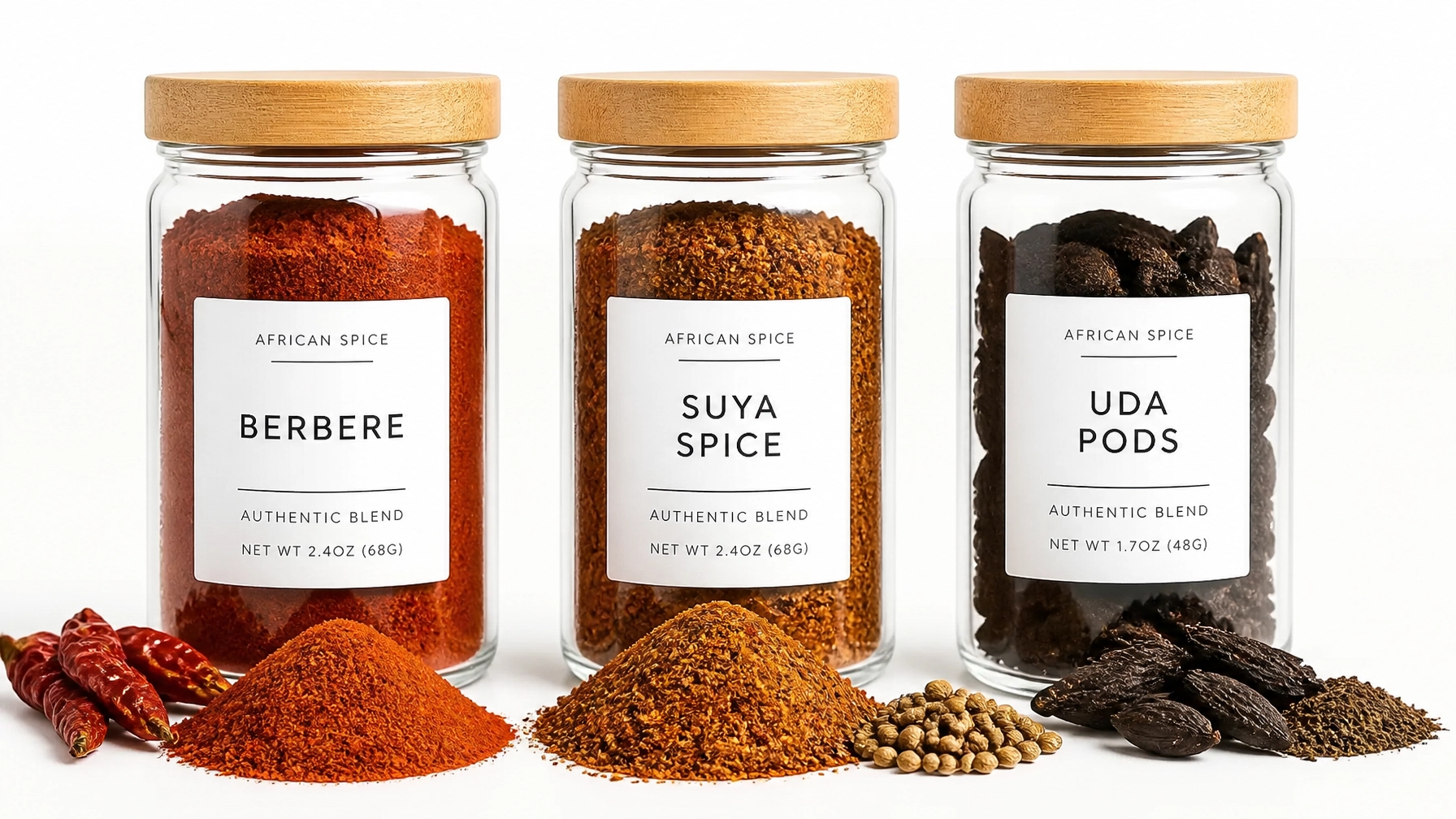
Suya Spice, most commonly known as Yaji or Tsire among the Hausa people, is perhaps the most iconic seasoning of West African street food. Its base is made from Kuli-Kuli (processed, defatted groundnut cake), which provides a unique, savory depth that cannot be replicated with standard peanut butter.
When looking for Suya spice on the BaoAfrik marketplace, prioritize listings that specify the inclusion of ginger, cayenne pepper, and Uda. The texture should be slightly coarse, ranging in color from deep orange to a burnt red. It is traditionally used as a dry rub for skewered meats, but it is equally effective as a seasoning for roasted vegetables or a spicy kick for popcorn.
2. Grains of Selim / Uda / Whentia / Xylopia aethiopica (Musky Peppercorn Pods)

Origin: West Africa (Ghana, Nigeria, Senegal)
Common Measurements: 50g, 100g whole dried pods
Description: Long, dark, wrinkled pods with a smoky, musky, and slightly bitter flavor profile.
Known as Uda in Nigeria and Whentia in Ghana, these pods are a vital component of traditional soups like Pepper Soup and Palm Nut Soup. Unlike standard black pepper, Grains of Selim offer an aromatic complexity that includes notes of nutmeg and smoke.
In a utilitarian pantry, these are often kept whole and added to liquids to infuse flavor before being removed, much like a bay leaf. Sellers on our platform often provide these in hand-selected batches to ensure the pods are robust and aromatic. When buying African spices online, ensure the pods are dark and dry, indicating proper preservation of the essential oils within the seeds.
3. Berbere / በርበሬ (Ethiopian/Eritrean Chili Blend)

Origin: Ethiopia / Eritrea
Common Measurements: 200g, 400g jars
Description: A fiery, multi-layered spice blend containing chili peppers, garlic, ginger, basil, and fenugreek.
Berbere is the soul of Ethiopian and Eritrean cuisine. It is the primary seasoning for Doro Wat (chicken stew) and various legume-based dishes. This blend is a masterclass in balance, offering heat from the chilies alongside the warmth of cardamom and the earthiness of fenugreek.
Because Berbere is a blend, the recipe can vary slightly between regions and families. On BaoAfrik, you can find sellers offering handcrafted batches that maintain the traditional ratios used in East African households. A high-quality Berbere will have a vibrant, deep red color and a pungent, inviting aroma that hits you the moment you open the container.
4. Fermented Locust Beans / Iru / Dawadawa / Ogiri / Soumbala (Umami Seasoning)
Origin: West Africa (Nigeria, Ghana, Burkina Faso, Mali)
Common Measurements: 100g (Dried or Paste)
Description: Alkaline-fermented beans of the African locust tree; intensely savory with a "funky" umami aroma.
If you are looking to achieve the deep, savory "base" flavor of traditional West African stews, Iru (Yoruba) or Dawadawa (Hausa/Ghanaian) is non-negotiable. Often compared to miso or blue cheese in its intensity, these fermented beans provide an incredible depth of flavor that salt alone cannot provide.
In the diaspora, many prefer the dried version of Iru for its longer shelf life and milder scent during storage. When browsing the marketplace, you will find variations such as Iru Woro (whole beans) or Iru Pete (mashed/paste). Each serves a specific purpose in dishes like Efo Riro or Okra Soup.
5. Harissa / هريسة (North African Chili Paste)
Origin: Tunisia / Maghreb region
Common Measurements: 150g, 300g jars or tubes
Description: A hot chili pepper paste combined with roasted red peppers, Baklouti peppers, serrano peppers, and other hot chili peppers, spices, and herbs like garlic paste, caraway seeds, coriander seeds, cumin, and olive oil.
Harissa is a staple of North African pantries, used both as a cooking ingredient and a tabletop condiment. It brings a smoky, garlicky heat to couscous, tagines, and grilled meats.
While mass-produced versions exist in western supermarkets, they often lack the punch and oil-rich texture of authentic Tunisian Harissa. The peer-to-peer nature of BaoAfrik allows you to find sellers who offer traditionally prepared pastes that emphasize the smokiness of the peppers rather than just the vinegar-heavy profile found in commercial brands.
6. Akpi / Njangsang / Njangsa / Ricinodendron heudelotii (Nutty Thickener)
Origin: Central and West-Central Africa (Cameroon, Ivory Coast)
Common Measurements: 100g, 200g whole seeds
Description: Round, blonde-colored oily seeds with a strong, nutty, and slightly fishy aroma.
Akpi (Ivory Coast) or Njangsa (Cameroon) is an essential ingredient for thickening sauces and adding a rich, nutty flavor to dishes like Mbongo Tchobi or Poisson Braisé. These seeds are usually ground before use to release their oils.
For the diaspora community, finding fresh Njangsa is a sign of a well-stocked pantry. Our marketplace connects you with sellers who understand the importance of seed freshness, ensuring that the natural oils: which carry all the flavor: remain intact until they reach your kitchen.
7. Uziza / Piper guineense / Masoro / Esoro Wisa (West African Black Pepper)
Origin: West and Central Africa
Common Measurements: 50g, 100g dried seeds or leaves
Description: A peppery, aromatic spice related to black pepper but with a more floral, citrusy, and pungent finish.
Uziza is unique because both its seeds and its leaves are used in African cooking. The seeds (Uziza seeds) are often used in Pepper Soup alongside Uda to provide a lingering, warm heat that is distinct from the immediate burn of Scotch Bonnet peppers.
When purchasing Uziza online, clarify whether you are buying the dried seeds or the dried leaves, as they provide different textures to a dish. The seeds are traditionally ground, while the leaves are often added whole or shredded into soups like Afia Efere.
Navigating the BaoAfrik Marketplace for Authentic Spices
Building your pantry through a marketplace is different from shopping at a standard grocery store. Because BaoAfrik is a peer-to-peer platform, you are engaging directly with individuals and small businesses who are passionate about African heritage.
How to Find the Best Sellers:
- Check the Origin: Look for listings that specify the geographic origin of the spice (e.g., "Cameroon Njangsa" or "Ethiopian Berbere").
- Review Seller Profiles: Visit the seller profiles to see their ratings and reviews from other community members.
- Utilize the Community: If you can't find a specific regional variant, use our request feature to let sellers know what you are looking for.
Why Buy African Spices Online via BaoAfrik?
Standard supermarkets often carry "African-style" blends that are diluted with fillers or lack the specific regional ingredients required for true authenticity. By using our platform, you are supporting a mission-driven ecosystem that prioritizes the cultural connection between the continent and the diaspora. You aren't just buying ingredients; you are supporting a community that values the same traditions you do.
Ready to start your journey? Register today and begin exploring the diverse world of African flavors. Whether you are stocking up on Yaji for a weekend barbecue or searching for the perfect Iru for your Sunday stew, the marketplace is here to bring the taste of home to your doorstep.
Building an authentic pantry is more than just a culinary project; it is an act of cultural preservation. Every jar of spice represents a piece of history, a regional identity, and a memory of home. We invite you to join our growing community and help us bridge the gap between Africa and the world, one spice at a time.
Looking for African products near you? Visit BaoAfrik.com
Leave a Reply